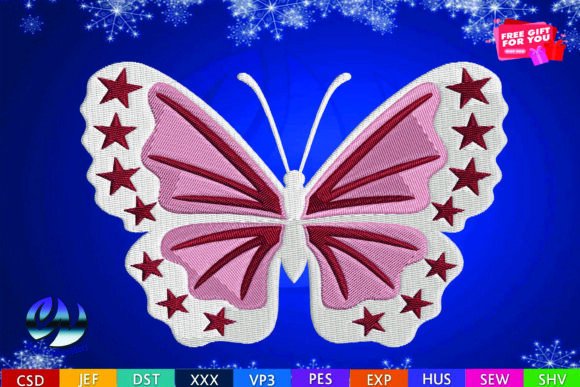
Butterfly Embroidery Design, 10 Formats Review
As a designer who has spent years curating assets for both my own craft business and client projects, I approach every new machine embroidery design with a critical eye. The market is flooded with generic patterns, so finding a piece that actually translates well from screen to fabric is a genuine relief. Today, I am evaluating the Butterfly Embroidery Design, 10 Formats, specifically the Star Butterfly variation featuring patriotic elements. Before you download this file or list it in your shop, let’s break down how it performs in real-world stitching scenarios.
First Impressions: A Bold Patriotic Statement
When I first loaded the preview of this design, the visual impact was immediate. This is not a delicate, wispy butterfly meant for subtle accents on a baby onesie. Instead, the Star Butterfly Embroidery Design presents a bold silhouette integrated with decorative stars. The layout feels balanced yet dynamic, suggesting a theme that leans heavily into Americana or celebratory patriotism. For an Etsy seller or boutique owner looking to capitalize on holiday seasons like the Fourth of July or Memorial Day, this aesthetic hits the mark perfectly.
The visual personality of the design suggests it belongs on items where the motif needs to stand out. It has a strong graphic quality that works well as a focal point rather than a background pattern. The integration of stars within the wing structure adds complexity without making the design look cluttered, provided the stitch density is managed correctly during digitizing. This is the kind of asset that elevates a basic tote bag into a statement piece.
Testing the Design on Real Projects
To truly understand the value of the Butterfly Embroidery Design, 10 Formats, I simulated its use across several common product categories. Imagine preparing a custom embroidered sweatshirt for a small shop product line. On a heavy cotton fleece, the bold lines of the butterfly would likely hold up beautifully, offering a professional finish that customers associate with high-quality handmade goods. The contrast between the fill stitch areas and any satin stitch borders would create depth, making the finished product feel substantial.
I also considered its application on kitchen linens, such as tea towels or aprons. In this context, the patriotic theme fits naturally into home decor collections. However, the success here depends entirely on the fabric texture. If you are using a textured linen, the intricate details of the stars might get lost if the thread colors do not offer enough contrast against the weave. Conversely, on a smooth canvas tote bag, the design pops, creating a clear, crisp image that enhances buyer engagement immediately.
For those selling personalized gifts, this design offers versatility. You could adapt it for holiday embroidery projects by changing the thread palette to match specific color schemes, though the star motif inherently ties it to red, white, and blue themes. As a digital product seller, having a design that looks good in printable mockups is crucial for sales, and the clean lines of this butterfly ensure that your marketing materials will look sharp and professional.
Navigating Fabric Challenges and Limitations
While the design is robust, experienced decorators know that no file is universal. There are specific situations where the Butterfly Embroidery Design requires careful handling. First, avoid using this on thin or highly stretchy fabrics without the proper stabilizer. The density required to render the decorative stars and the butterfly body can cause puckering on lightweight knits or jersey materials. Always test on scrap fabric first to ensure the hoop size accommodates the tension without distorting the garment.
Curved surfaces, such as caps or hats, present another challenge. While the overall shape of the butterfly is manageable, the detailed corners of the stars might struggle to lay flat on a curved brim. If you plan to use this for cap embroidery, consider adjusting the placement to the front panel where the surface is flatter, or opt for a smaller hoop size to minimize distortion. Additionally, on dark fabrics, the visibility of the design relies heavily on underlay stitches and thread color choices. Without sufficient coverage, the underlying fabric color can bleed through the fill stitch, diminishing the visual appeal of the finished product.
Design Integrity and Commercial Viability
From a commercial embroidery perspective, the clarity of the stitch definition is paramount. This design appears to utilize a mix of fill stitch for the wings and potentially running or satin stitches for the outlines and stars. When reviewing the potential stitch density, it is vital to ensure that the threads do not overlap too heavily in tight areas, which can lead to thread breaks or bulky patches on the back of the item. A clean backside is often what separates a hobbyist project from a sellable boutique item.
For the craft business owner, the inclusion of 10 formats is a significant advantage. Whether you run a Brother, Bernina, Janome, or Tajima machine, having the correct embroidery file format ensures compatibility without needing third-party conversion software, which can sometimes corrupt the data. This flexibility allows you to integrate the design into various production workflows seamlessly. However, always confirm the specific license terms before selling finished items. Ensure you have the rights to use the design for commercial purposes, whether you are selling the physical embroidered patch, the finished apparel, or the digital file itself.
Practical Designer Notes for Success
Before committing to a full production run, follow these practical steps to maximize the potential of the Butterfly Embroidery Design:
- Test on Scrap Fabric: Stitch out a sample on the exact material you intend to use. Check for puckering, thread breaks, and alignment issues.
- Verify Stabilizer Needs: Given the density of the stars and butterfly body, a cutaway stabilizer is likely necessary for knit fabrics, while tear-away may suffice for wovens.
- Check Thread Contrast: Ensure the thread colors chosen provide enough contrast against the fabric, especially if working with dark backgrounds.
- Review Hoop Size: Confirm that your hoop can accommodate the full width and height of the design without cutting off the outer edges of the wings.
- Inspect Small Details: Zoom in on the digital preview to check if the stars are too small for your machine's needle capabilities, which could result in skipped stitches.
- Create Mockups: Generate both light and dark fabric mockups to see how the design translates visually before listing it for sale.
In conclusion, the Butterfly Embroidery Design, 10 Formats is a strong asset for designers looking to add patriotic flair to their portfolio. It bridges the gap between a simple Bugs category item and a sophisticated design asset suitable for custom apparel, holiday gifts, and small shop merchandise. By understanding its strengths and limitations regarding fabric texture, hoop size, and stitch density, you can leverage this design to create high-value, professional-looking products that resonate with customers. Whether you are a seasoned embroiderer or a creative entrepreneur just starting out, this file offers a solid foundation for your next project.